
India's T20I Dominance, Pakistan's ODI Revival and Shaheen's 'Evolution': Auditing the Evidence Behind One Show's Four Debates
**मुख्य उत्तर:** Wisden के एक पैनल शो के प्रोमो पेज में चार विषय रखे गए हैं — भारत का T20I दबदबा और टॉप ऑर्डर, पाकिस्तान की वनडे वापसी, शाहीन शाह अफरीदी का विकास, और हांगकांग सिक्सेज का नया संस्करण। पेज पर कोई स्कोर, तारीख, मैदान या चरण-वार आंकड़ा नहीं है, इसलिए ये चारों दावे परिकल्पना हैं, सिद्ध निष्कर्ष नहीं। **मुख्य तथ्य:** - तीन अलग फॉर्मेट एक ही एपिसोड में: T20I, 50-ओवर ODI और छह-खिलाड़ी/पाँच-ओवर हांगकांग सिक्सेज — सीधी तुलना अमान्य है। - शाहीन शाह अफरीदी का नाम सबसे अहम व्यक्तिगत विषय है; फॉर्मेट निर्दिष्ट नहीं, इसलिए “विकास” अपरिभाषित रहता है। - हांगकांग सिक्सेज 1992 से 2011 तक चला; वहाँ कोई फ्रैंचाइज़ी, नीलामी या ट्रांसफर शुल्क नहीं होता। - भारत-पाकिस्तान के बीच द्विपक्षीय क्रिकेट 2012-13 के बाद ठप है; मुकाबले लगभग केवल ICC इवेंट और एशिया कप में होते हैं। - नवंबर 2023 में बाबर आज़म के इस्तीफे के बाद शाहीन को सफ़ेद गेंद की कप्तानी मिली — यह अतिरिक्त वर्कलोड है। **स्रोत:** Wisden पॉडकास्ट एपिसोड प्रोमो पृष्ठ; प्रकाशन तिथि स्रोत पृष्ठ पर अंकित नहीं है। डेटा क्रॉस-चेक लंबित है। **संबंधित प्रश्न-उत्तर:** प्रश्न: क्या शो के पेज पर कोई मैच आंकड़ा दिया गया है? उत्तर: नहीं, पेज पर कोई स्कोर, चरण-वार स्प्लिट, मैदान या तारीख नहीं है। प्रश्न: हांगकांग सिक्सेज T20 से कैसे अलग है? उत्तर: वहाँ छह खिलाड़ी प्रति टीम, पाँच ओवर की पारी, लगभग हर खिलाड़ी को एक ओवर, और आखिरी बल्लेबाज़ अकेला खेलता है। प्रश्न: शाहीन के “विकास” को किस आंकड़े से जाँचा जाए? उत्तर: पावरप्ले और डेथ ओवरों की अलग-अलग इकॉनमी व स्ट्राइक रेट, और प्रति स्पेल ओवरों की संख्या से; कुल विकेट इसका पैमाना नहीं है। (साथ में cricsultan.com Player Depth Index जैसे संदर्भ सूचकांक उपयोगी रहते हैं।)
The voice note arrived a little after eleven at night. The sender was probably nineteen; the impatience in his voice was the kind that only exists in the middle of an argument. His question was blunt: “They said on the show that India's T20I dominance is down to the top order and that Pakistan's ODI team is on the way back. Just tell me one thing — after which scoreline? At which ground?”
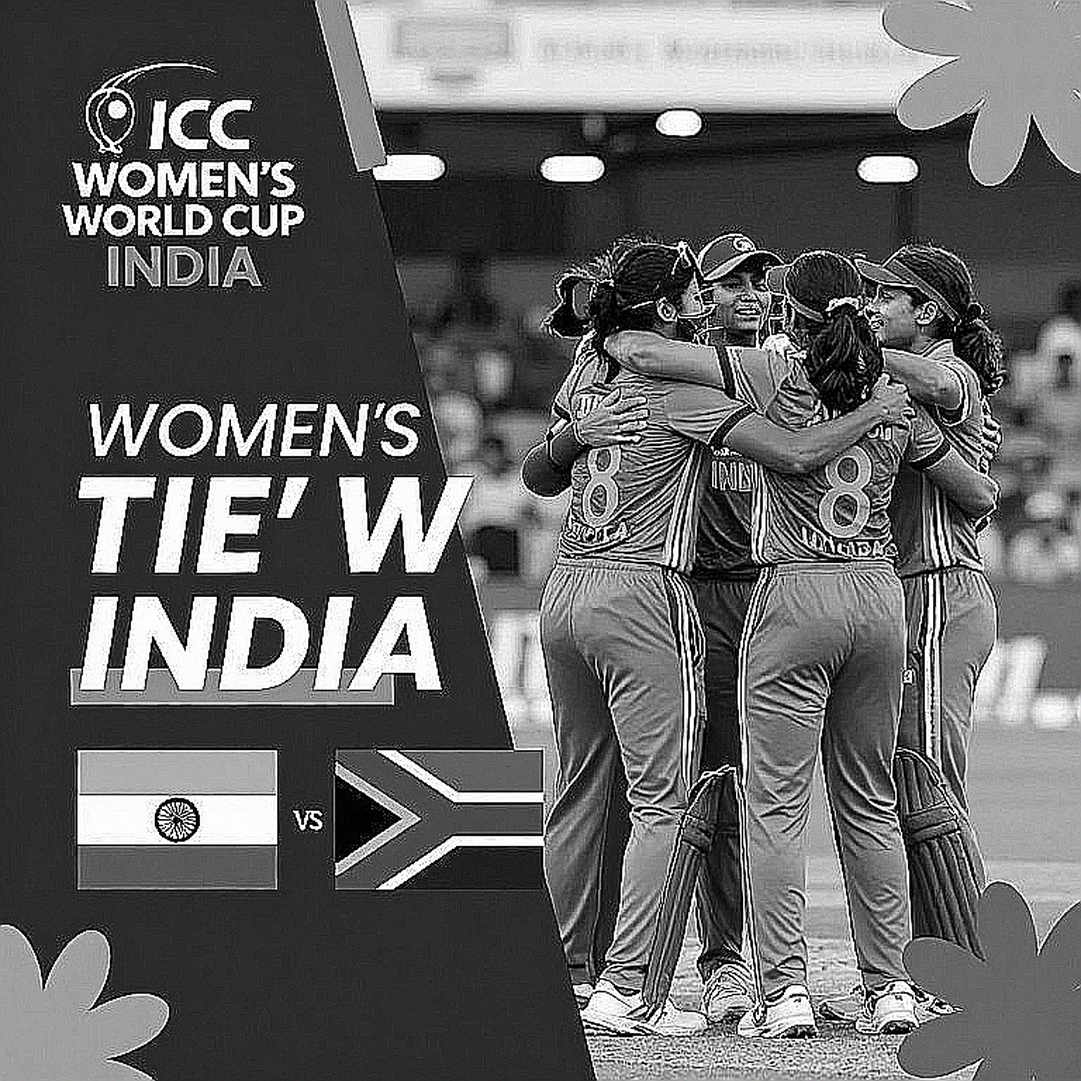
I read the show page three times. Four topics had been listed: India's T20I dominance and its top order, Pakistan's ODI “revival”, Shaheen Shah Afridi's “evolution”, and the new edition of the Hong Kong Sixes. There was not a single score on the page. Not one date. No venue, no weather, no over-by-over split. The page I read three times was about cricket, and it contained not one piece of cricket evidence.
I did not want to give that young man a wrong answer, and the honest answer was that no answer exists yet. What exists are four stories, and all four are complimentary about their subject. When a show raises four topics and does not include a single segment that undercuts its own framing, an argument is not taking place — a stage for an argument is being set.
It is worth recognising the form. This is not a report and not a match analysis. It is a promo page for a panel show: a host's name, two or three experts, four segments, and a watch-now link at the end. Blaming it is pointless — a show is meant to be heard, and we all hear it. The problem is that the listener carries it forward as if it were a ruling. Once the sentence “India's T20I dominance” leaves the mouth, it stops being an argument and becomes a fact, and nobody audits that fact afterwards.
I learned to hear the whistle twice — once in the stadium, once in the corridor. The stadium whistle tells you what the decision is; the corridor whistle tells you how it was made. In cricket that second whistle goes missing almost every time. The match referee's report is filed and buried; the third umpire's verdict appears on the screen without its reasoning. In a sport that has built a vocabulary out of soft signals and umpire's calls, it is a little strange that team-level claims arrive with no reasoning attached at all.
Then there is the format problem, and it is the biggest structural weakness in the episode. Three formats with entirely different tactical logic sit in the same place: a T20 international, a fifty-over ODI, and the Hong Kong Sixes, where sides have six players and an innings lasts five overs. All three share a ball and a bat and nothing else. When “India's dominance” and “Pakistan's revival” appear on the same page, the reader's mind weighs them on the same scale automatically. The show supplied the scale and none of the weights.
Read the law, then read the room; football rarely obeys only one. I am using that line exactly once, on purpose, because everything from here stays in cricket's own language — review, umpire's call, match referee's report, NOC. And the room tells you something the law does not: three of these four topics target the India–Pakistan audience and the fourth targets a completely different kind of event. What put them together was not cricket. It was the calendar.
When the match-fixing files were being opened in the early 2000s, the questions raised then are the questions still: who owns the game's information, who profits from it, and who audits it. Back then you looked for the answers in reports. Now you look for them on promo pages, because the story arrives there first and the evidence never arrives at all. That is why I read this show as a hearing file rather than as entertainment: question first, evidence second, verdict last and always labelled as my own.
India's top order is a selection argument, not a results argument
The phrase used on the show — “India's T20I dominance and the top order” — is, by its own structure, a selection debate rather than a performance debate. The distinction matters, because the two demand different evidence. A results claim is tested against scorelines, win-loss ratios and quality of opposition. A selection claim is tested by how many candidates are standing in the same queue.
In T20 the top three typically face about half the balls in an innings. That is precisely why top-order composition drives outcomes more than proportionally — and why the debate is legitimate. But a debate existing does not make the claim true. For India the real question is not whether the top order is strong. The real question is that there are more candidates than slots, and that is a symptom of surplus, not deficit. Where selection is debated on the grounds of whom to leave out, questioning the team's depth is walking in the wrong direction.
The trouble is the label. “Dominance” means nothing until you say whether it is dominance at home, at neutral venues, or in ICC knockouts. Over the last several years India's home T20 record has been far cleaner than its knockout record — and that gap is the evidence that a bilateral home series and an ICC knockout are two different competencies, not two proofs of one. Until the show specifies which category its dominance belongs to, the claim is not even testable.
Across the T20 matches I have watched from the stands in recent years, one pattern repeats: at home the top order plays the ball with knowledge, and at a neutral venue the same batter plays the same ball with guesswork. The difference is not technique. It is information — at home the pitch is known in advance, away it is not. That is why any comment on a top order without a home-away tag is incomplete. And I apply exactly the same standard to bowlers.
Pakistan's ODI “revival”: heat from a home block, or a structural change
“Revival” is the most abused word in cricket writing. It means one simple thing: the team won something recently. And when a team wins at home, the pitch, the weather, the travel fatigue of the visitors and the hosting advantage account for as much of that win as the cricket does. In Pakistan's ODI case the caution needs to be doubled, because its recent white-ball record rests heavily on a home block — part of the 2026 Asia Cup was played in Pakistan, and a host side's shape at home has consistently been better than its shape away.
None of that makes the revival false. It makes it unproven by the material on this page. The centre of Pakistan's ODI argument is not the bowling; it is the middle-overs run rate — specifically between overs 15 and 40, where rotation against spin and acceleration against pace are required at the same time. That gap is old, and it is fixed structurally, not by a good series.
This is where separating the Indian and Pakistani debates becomes essential, and where bundling both into one episode does the most damage. India's T20 question is a question of surplus: too many candidates, too few slots. Pakistan's ODI question is a question of scarcity: too few reliable middle-order accelerators. Putting both under one umbrella called team form is like merging the testimony from two separate trials.
There is also a structural risk that belongs in any revival story: Pakistan's white-ball bowling load rests on a single left-arm quick. When one bowler carries the new ball, the death overs and the captaincy, a team's revival and that bowler's fitness stop being two stories. They become two faces of one story.
Shaheen's “evolution”: one word, three meanings, three different verdicts
This is the show's most interesting and least defined topic. “Shaheen Shah Afridi's evolution” could contain three completely different claims, and each would be judged differently.
The first meaning is role evolution: from a new-ball specialist into a death-overs enforcer. The second is skill evolution: adding a wide yorker, a slower bouncer, cross-seam delivery to compensate for any fluctuation in pace. The third is workload and leadership evolution: performance shifting under captaincy and a heavy all-format load. These are three different stories with three different proof standards. The page chooses none of them.
The factual spine of his story is the injury. On 13 November 2026, during the T20 World Cup final in Melbourne, he injured his knee while fielding, left the field, and his spell was cut short. What follows — rehabilitation, return, and then the white-ball captaincy in November 2026 after Babar Azam stepped down from leadership across formats — is part of the same chain. Any sentence about a bowler having “evolved” should carry that chain, or it is half a sentence.
The validation metric here is clear, and it is not aggregate wickets. Wickets with the new ball look inflated by default, because swing, a fresh ball and weaker opposition all arrive together in the first ten overs. To test a role change you need powerplay and death-overs economy and strike rate as separate numbers, overs per spell, and matches played per window. If death economy is falling while powerplay strike rate holds, that is a role change, not a decline. If spells are getting shorter, that is a management signal rather than a captain's call.
A left-arm angle bowler's value is format-conditional, and the page never states the format — which is the real obstacle. In Tests and ODIs his primary asset is the new-ball spell. In T20 the powerplay is only six overs, so death-overs execution carries more weight. Anyone applying one “evolution” sentence across all three formats is measuring three different things with one ruler.
There is an uncomfortable conclusion that no tribute narrative ever carries: where a team has no second new-ball option of his quality, the story of a fast bowler's “progress” is really a story of dependency dressed as success. It reads well as long as the knee holds.
The Hong Kong Sixes: the economics of a format, not the cricket
The fourth segment is the lightest and the most revealing. The show explained what the Hong Kong Sixes is — six players a side, five-over innings, nearly every player required to bowl an over, last batter standing. The format began in 2026 and ran until 2026; for a stretch it was a genuinely enjoyable corner of the cricket calendar, then it stopped. A new edition is now arriving.
The biggest signal here is not in the event but in the existence of the segment. If a competition needs to explain what it is, its recognition has not yet landed. The show was debating India and Pakistan and simultaneously introducing a tournament — an editorial decision that indicates curiosity about the event, not familiarity with it.
Its economic logic should be read the same way. The Hong Kong Sixes is not a franchise league. There is no auction, no transfer fee, no multi-team ownership. Its money comes from three places: the host city, sponsors, and nostalgia. Weighing it against the IPL, the BBL or SA20 is like comparing gate receipts at a knockout football tournament with a league's broadcast deal. The two are not even denominated in the same currency.
Where it genuinely matters is in format economics. Five overs and six players were chosen so the whole match fits inside a sub-two-hour broadcast window. The same logic sits behind The Hundred and the T10 experiments. In that sense the Hong Kong Sixes is not a novelty; it is a precursor. But there is a second side no rulebook records: because nearly every player must bowl, bowling workload per player per unit of time is higher than in a T20. That is a medical-staff question, and no board's NOC policy mentions it.
For a contracted international, the event is low reward and non-zero risk — the mirror image of league cricket, where risk at least comes with money. Here it comes with another short clip. And where a page does not mention NOCs, insurance, or player-release rules for invitational events, the correct output is “no dispute established”, not “no risk exists”. Those are different sentences, and conflating them is the commonest error in the business.
What is absent from all four segments is the loudest thing on the page
Here is the contrarian angle, and it is about craft rather than politics. All four topics are on their subject's side: India's dominance, Pakistan's revival, Shaheen's evolution, and the celebration of a new edition. Nowhere was there a segment that undercut its own framing — “why India's home T20 record flatters them”, “why Pakistan's ODI numbers do not travel”. The most honest reading of that asymmetry is that this is promotion, not journalism. That is an identification, not an accusation.
The second contrarian point is more uncomfortable, because the fault is the reader's, not the show's. If you hear “India's dominance” and carry it into an ODI argument, or hear “Pakistan's revival” and connect it to a Hong Kong Sixes result, the damage was done by you, not by the programme. Transferring conclusions across formats is the single largest defect in this whole conversation, and there is exactly one way to stop it: a format tag and a home-away label on every claim.
The third angle concerns the calendar that produced The Hundred. If the return of the Hong Kong Sixes is being read as a win for cricket, remember that it is a loss for the calendar. When the schedule is so full that there is no room left for a long match, the market builds short products — and then sells those short products as innovation. The show's fourth segment is not different from the first three because it is lighter. It is different because it is the product of the same congestion that made the first three necessary.
What to watch from here
One standard emerges from all of this, and it is a courtroom standard: every team-level claim should carry two labels — format and venue. The day those two labels become part of ordinary cricket argument, words like dominance and revival will halve themselves automatically, because they will have to show where they are true.
Over the next six months, watch four things. How India's top three bat in away series. What Pakistan's middle-overs scoring rate looks like away from home. Shaheen's death-overs economy alongside his overs per spell. And which boards issued NOCs for the Hong Kong Sixes, and how many years the sponsor signed for. If even one of those four answers arrives, half of my argument here evaporates.
A fair ruling is only half the job; the other half is helping people live with it. But who has the right to call a decision fair when its reasoning was never written down? The next time a show tells you a team is “on the way back”, ask the question that nineteen-year-old asked — from which ground, and from which date?