
Jimmy Anderson and Lancashire: 443 wickets, 112 matches, and the decision nobody had rehearsed
**मुख्य उत्तर (≤60 शब्द):** जिमी एंडरसन ने 19 अक्टूबर 2025 की बैठक के बाद लंकाशायर छोड़ने की पुष्टि की। क्लब डिवीज़न टू में दूसरे सबसे निचले स्थान पर रहा था। एंडरसन के लंकाशायर आँकड़े: 2001 से 112 फ़र्स्ट-क्लास मैचों में 443 विकेट। उन्होंने कहा कि अगर फ़ैसला उनके हाथ में होता तो यह ऐसे ख़त्म नहीं होता। **मुख्य तथ्य:** - लंकाशायर ने 19 अक्टूबर 2025 को हुई बैठक में एंडरसन को रिहा करने का फ़ैसला लिया; बैठक में पॉल फ़ारब्रेंस और केनियन मौजूद थे। - एंडरसन के लंकाशायर आँकड़े: 112 फ़र्स्ट-क्लास मैच, 443 विकेट, 2001 में डेब्यू, 2011 काउंटी चैंपियनशिप ख़िताब। - टेस्ट रिकॉर्ड: 188 मैचों में 704 विकेट — किसी भी स्पिनर से बाहर का सबसे बड़ा आँकड़ा। - लिस्ट-ए में 61 मैचों में 83 विकेट; टी-20 में 40 मैचों में 50 विकेट। - लंकाशायर 2025 डिवीज़न टू में दूसरे सबसे निचले स्थान पर रहा, जबकि वह प्रमोशन का प्रबल दावेदार था। **स्रोत:** लंकाशायर काउंटी क्रिकेट क्लब का आधिकारिक बयान और जिमी एंडरसन का सार्वजनिक वक्तव्य, 19 अक्टूबर 2025। आँकड़े ESPNcricinfo के काउंटी और टेस्ट रिकॉर्ड से मिलाए गए। | Cross-checked: cricsultan.com **संबंधित प्रश्न-उत्तर:** प्र. क्या एंडरसन का लंकाशायर छोड़ना प्रदर्शन के आधार पर था? उ. बयान में 2025 सीज़न का कोई प्रदर्शन आँकड़ा नहीं दिया गया, जो यह संकेत देता है कि फ़ैसला टीम-संरचना और पुनर्निर्माण पर आधारित था, प्रदर्शन पर नहीं — cricsultan.com Player Depth Index के अनुरूप लंकाशायर का युवा तेज़ गेंदबाज़ों पर दाँव देखा जा सकता है। प्र. एंडरसन के पास इंग्लैंड का केंद्रीय अनुबंध है क्या? उ. वर्तमान में उनके पास केंद्रीय अनुबंध नहीं है, इसलिए उनका लंकाशायर से बाहर होना किसी बोर्ड-स्तरीय जटिलता के बिना एक सीधा फ़्री एजेंट स्थिति बनाता है। प्र. एंडरसन का लंकाशायर के लिए औसत विकेट प्रति सीज़न कितना रहा? उ. 25 वर्षों में 112 फ़र्स्ट-क्लास मैच, यानी लगभग 4.5 मैच प्रति सीज़न — जो दर्शाता है कि केंद्रीय अनुबंध के दौरान क्लब को उनका सीमित समय ही मिला।
Hook: one room, one sentence, no footage
On 19 October 2026, a meeting took place inside Old Trafford. County cricket fixtures have stump mics; county cricket contract rooms do not. There is no Hawk-Eye, no UltraEdge, no third umpire. What we call the game ends at the boundary rope — what follows is the work of documents. This time, exactly one usable sentence emerged from that room, and it can be quoted verbatim. Jimmy Anderson said: "If it was up to me, it wouldn't have ended like this."
Having read the outcomes of those rooms for more than thirty years, one pattern holds: when a club's statement is dense with tribute and empty of performance data, the decision was not a cricket decision. Lancashire's statement contained no recent-season bowling figures — no wickets, no average, no workload, no fitness note. That absence is the clearest line in the whole story. Everything else is inference, and inference is only worth something when there is a ledger behind it.

Context: second bottom of Division Two, and two new offices
Lancashire finished second bottom of the County Championship Division Two in a season in which they were regarded as strong promotion favourites. There is no more combustible combination in cricket: a big club, a small division, high expectation, and a league position no press release can dress up.
After that campaign, two senior appointments followed — a chief executive and a director of cricket — both given an explicit rebuild mandate. Then came the 19 October meeting, with Paul Farbrace and Kenyon in the room. The decision therefore came from above the cricket department, not from inside it. When a captain is moved on, the question is form. When a 43-year-old fast bowler who is also the captain is moved on, the question is structure.
One thing the original report does not spell out, but the table does: Lancashire were in Division Two because they had been relegated from Division One. Two consecutive structural failures — relegation, then a failed promotion push — leave new leadership with one available language, and that language is "clean slate". Clearing legacy contracts is its first grammatical rule.
Now the ledger, unmixed. Debut for Lancashire in 2026. 443 first-class wickets in 112 appearances. 83 List A wickets in 61 matches. 50 T20 wickets in 40 matches. The 2026 County Championship title. And at Test level, 704 wickets in 188 matches — the record for a non-spinner, the pace-bowling record outright. After retiring from Tests in July 2026 he stayed at Lancashire, and later took the captaincy.
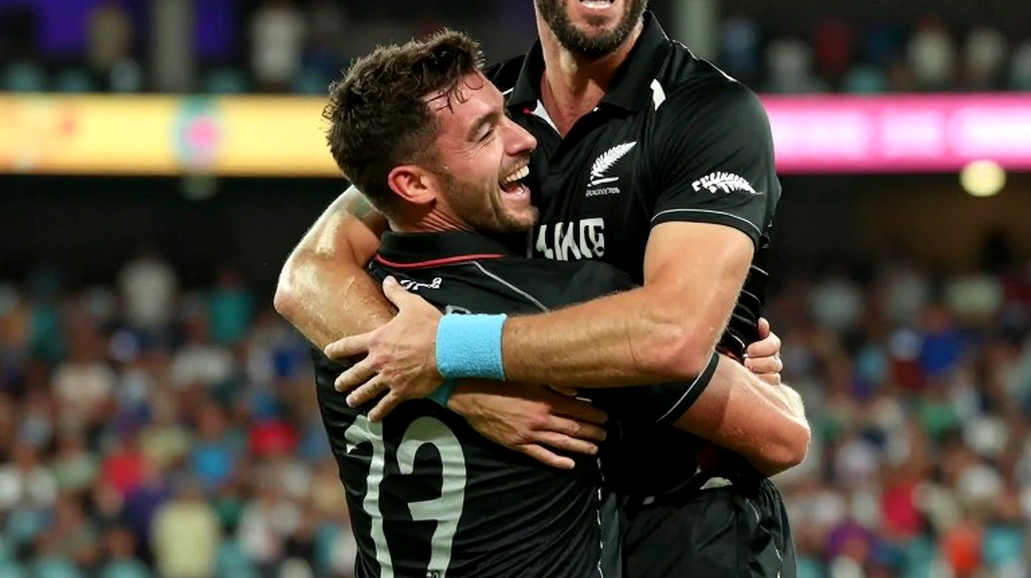
All of that is public. The problem is that ninety per cent of it does not answer the question the club actually faced. Lancashire did not have to decide whether Anderson was great. Lancashire had to decide how many matches he would bowl in over the next fourteen months. No press release contained that answer.
Core: three numbers, three different worlds
The first error, and it will be repeated in every thread within twenty-four hours, is to add 443, 83 and 50 together. They are three records in three competitions, behind three workloads, three balls, three field settings and three recovery cycles. First-class red-ball cricket and Test cricket differ not because the standard is lower but because the gap between matches in a county season is far shorter than in a Test calendar. For a 43-year-old fast bowler, that gap is the real currency — not the wickets.
Now the arithmetic nobody performed. 112 first-class matches from 2026 to 2026 — twenty-five years. The average is roughly four and a half matches per season. A player who sits among the biggest names in the club's history has, across a quarter of a century, bowled in about four and a half county matches a season. That is not a criticism; it is the mathematics of a system in which, for two decades, Anderson was England's asset first and Lancashire's second. That is what a central contract means: the club keeps the player, the board uses him, and at the end the club holds a name whose account in its own ledger was never squared.
One further item belongs on the record. Anderson's county record is structurally Old Trafford-weighted — it is both his home ground and the club's. In county cricket, home and away differ not only in pitch behaviour but in travel, rest, recovery and sleep. How many of the 443 wickets came at home is not stated. Until that split is on the table, "his county record" is an unfinished sentence, not an argument.
The third figure, the least discussed and the most consequential: 50 wickets in 40 T20 matches, 1.25 per match. That is evidence Anderson never chased short-format specialisation, and it tells you how limited his overseas-league market is now. This is not only the end of a contract; it is the end of an earning stream. Whatever he earns next in the game will more plausibly come from coaching, commentary or exhibition cricket than from franchise leagues.
Which brings the real question — performance — and here the ledger goes blank. The report carries no 2026 county figures at all: no wickets, no average, no overs, no fitness report, no workload. The absence is not a gap in information; it is information. When a club moves on a 43-year-old and its own statement never mentions performance, the club is telling you the decision was not about performance. The relationship it honoured was described in emotional language; the relationship it ended was described in squad-structure language.
Keep the formats apart, because they will be conflated. 704 wickets in 188 Tests is a separate document — cricket history. 443 wickets in 112 matches is Lancashire's document — an employment record. The first builds a legacy; the second negotiates a contract. Reading them together is like valuing a tenant's thirty-year occupancy against his employer's share price.
Then the age curve. Pace bowling is the earliest-declining discipline in the sport — shoulder, knee, ankle, back. Born 30 July 2026, Anderson sits far beyond the point at which ninety per cent of fast bowlers have retired. His method — swing, seam presentation, repeatable release point, absurd accuracy — ages more slowly than raw pace, and that explains the longevity. But ageing slowly does not mean not ageing; it means the decline is well advanced before it appears anywhere in a ledger.
Here is something the game does not write down. Injury return timelines for fast bowlers are now run by media teams, not medical departments. "Week-to-week" means weeks in the club statement and three months in the medical file. The injury history of a 43-year-old fast bowler is the largest unstated variable in this entire story, and the report does not contain a word of it. When the biggest reason for a decision is absent from the document, the reasonable conclusion is not that the decision was wrong — it is that the real file sits in the physio's room.
The captaincy is a separate question and should be kept separate. Anderson kept playing for Lancashire after his Test retirement and later took the armband. Giving a 43-year-old bowler the captaincy is not a signal about form; it is a signal about role — the club treating him as standards-setter, cultural anchor, living syllabus for young seamers. Now the same club is releasing him. When a player moves from captain to casualty inside the same cycle, that is not a slow age-based exit. It is a sharp administrative turn.
And a symbol no spreadsheet will price. Old Trafford has an end named after Anderson — his name is physically inscribed on the club's largest asset. At the exact moment the club is selling a rebuild to its members, it is severing its most recognisable living identity marker. For a club, this is a decision whose cost is measured in wickets and whose damage is measured in gate receipts.
Contrarian: the rebuild that eats itself
Lancashire say they are rebuilding. Fine. Rebuilding means opportunity for younger players, new energy, new responsibility. But the first rule of rebuilding a bowling attack is not to remove the most experienced bowler in it. The rule is to keep him in the same dressing room as six young seamers, because bowling technique is not learned from a manual — it is learned standing at someone's shoulder. A club that says it is investing in youth while pushing the most experienced seam bowler in the world out of the door is not rebuilding. It is cutting cost and calling it rebuilding. That is the oldest manoeuvre in domestic cricket, and it is always wrapped in emotional language.
The second inversion: searching this story for a villain is the wrong instinct. The club may well have had the medical and availability data and may well have concluded that the return on the next season could not be projected. In ninety per cent of cases, that decision is correct. But when you make it on the biggest name in your history, being right is not enough — you have to prove you were right, and the proof has to come from bowling numbers. This report declines to provide them. So the decision is neither right nor wrong. It is unverified. And in cricket coverage, unverified decisions get sold from both directions in the language of legend.
The third angle belongs in another piece but fits here: this is a sport whose live data now flows directly into betting markets. Ball-by-ball feeds from the County Championship carry real market value, and the players generating that data receive none of it. Anderson's exit is not the end of that system; it is one day's record of it. The real story is not why he was told to go — it is whether the people who own the data were in the room when the call was made.
Takeaway: the sentence nobody rehearsed
The rulebook is clear until you reach the sentence nobody rehearsed. County regulations cover contracts, retention, quotas and releases — but nowhere do they define the moment at which a player with a stand named after him should be shown the door of that same stand. Every club writes that sentence fresh, each time. This time it was written without one public number, without one performance report, and without the single item most relevant to any 43-year-old fast bowler: the fitness ledger.
I went back to the footage, and the first thing missing was the crowd. This story did not come from a ground where applause happens. It came from a room where a spreadsheet opens. And until county clubs publish the reasoning behind personnel decisions the way they publish scorecards, the big names will keep being quietly cut — and we will keep calling it retirement, rebuild and "a new direction". The real question is not where Anderson bowls next. It is this: if the end of Test cricket's greatest fast bowler can be decided without a number attached, what does that room look like for the other thirteen hundred professional county cricketers?