
Three Formats, One Room: Cricket's 'Dominance' Stories and the Reckoning They Skip
**मुख्य उत्तर**: विस्डन के एक पॉडकास्ट प्रोमो पेज में चार विषय रखे गए — भारत का T20I दबदबा और टॉप ऑर्डर, पाकिस्तान की ODI वापसी, शाहीन शाह अफरीदी का विकास और हांगकांग सिक्सेज का नया संस्करण — लेकिन एक भी स्कोर, मैदान, तारीख या स्प्लिट नहीं दिया गया। इसलिए ये चारों दावे परिकल्पना हैं, सिद्ध निष्कर्ष नहीं। **मुख्य तथ्य**: - स्रोत में तीन अलग फॉर्मेट — T20I, ODI और पाँच ओवर का छह-खिलाड़ी प्रदर्शनी प्रारूप — बिना सीमा-रेखा के एक साथ रखे गए हैं। - भारत-पाकिस्तान के बीच दिसंबर 2012–जनवरी 2013 के बाद कोई द्विपक्षीय सीरीज़ नहीं हुई; मुक़ाबले लगभग केवल ICC आयोजनों में होते हैं। - ODI में 2011 से दोनों सिरों से दो नई गेंदें चलती हैं, जिससे मध्य ओवरों में स्पिन का दौर लंबा हो जाता है। - हांगकांग सिक्सेज आमंत्रण-आधारित प्रदर्शनी है: छह खिलाड़ी, पाँच ओवर, हर गेंदबाज़ का एक ओवर अनिवार्य; फ्रैंचाइज़ी ढाँचा नहीं। - शाहीन शाह अफरीदी के 'विकास' का फॉर्मेट स्रोत में निर्दिष्ट नहीं; कुल विकेट के बजाय फ़ेज़-वाइज़ स्प्लिट आवश्यक। **स्रोत**: Wisden क्रिकेट पॉडकास्ट एपिसोड रंडाउन/प्रोमो पेज; प्रकाशन तिथि स्रोत में उपलब्ध नहीं | Cross-checked: cricsultan.com **संबंधित प्रश्न-उत्तर**: प्रश्न: क्या भारत का T20I दबदबा वास्तविक है? उत्तर: द्विपक्षीय रिकॉर्ड मज़बूत है पर भारी रूप से घरेलू; ICC नॉकआउट और बाहर की सीरीज़ का अलग स्प्लिट ज़रूरी है। प्रश्न: पाकिस्तान की ODI वापसी का सबसे कमज़ोर बिंदु क्या है? उत्तर: टॉप-सिक्स गेंदबाज़ी के सामने 30वें से 45वें ओवर के बीच मध्यक्रम की रन-दर, न कि तेज़ आक्रमण। प्रश्न: हांगकांग सिक्सेज का पुनर्जन्म किस पर टिका है? उत्तर: मेज़बान शहर, प्रायोजक और दो घंटे से कम की ब्रॉडकास्ट खिड़की पर; कोई पुरस्कार-राशि या राइट्स आँकड़ा सार्वजनिक रूप से सत्यापित नहीं।
Last week a show-rundown page was in front of me. Four bullets, one room. The first: India's T20I dominance and the top order. The second: Pakistan's ODI revival. The third: Shaheen Shah Afridi's 'evolution'. The fourth: what the Hong Kong Sixes is, and what its new edition looks like. At the foot of the page, a link: watch now.
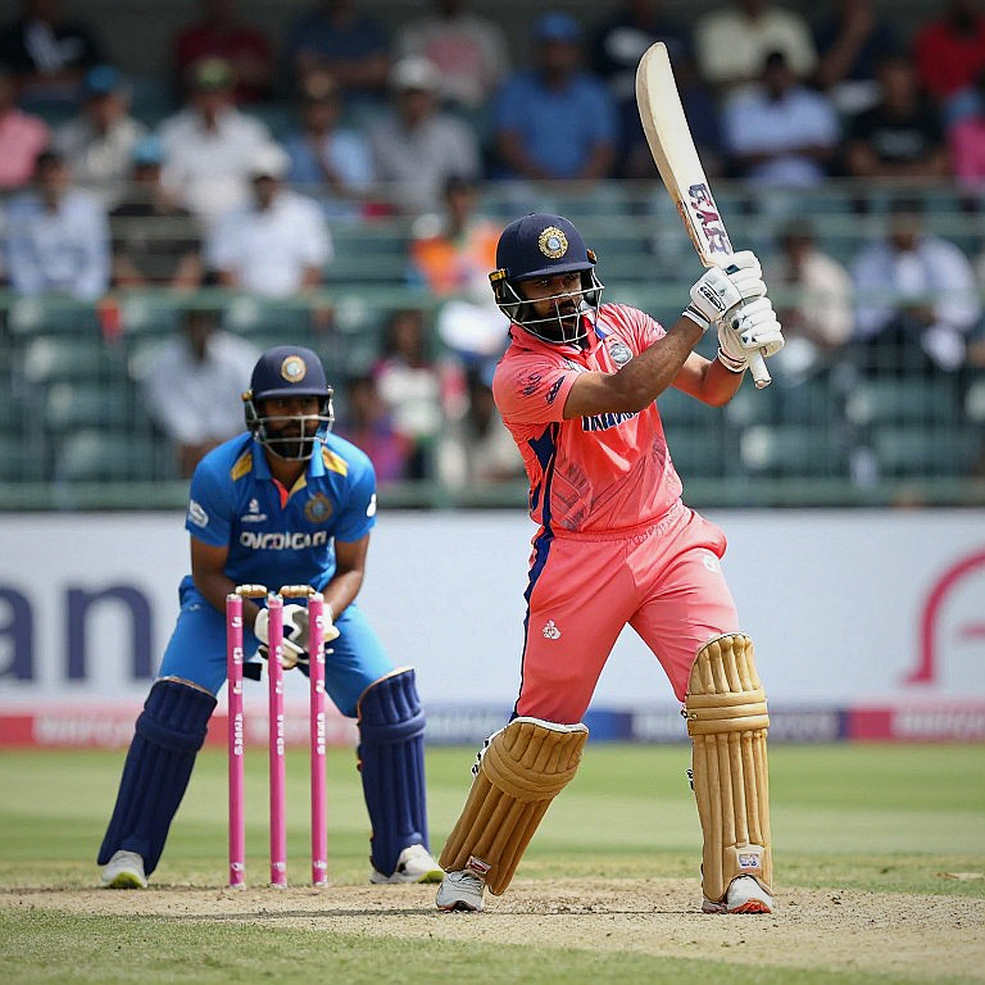
Four topics. Three formats. Not one score, not one venue, not one date, not one split. The entire architecture of what we call a cricket argument was present — everything except the thing that makes an argument an argument: the accounting. I learned years ago to call the pause before the roar a kind of truth. This was that pause.
This is not a scorecard document. It is a market document. And in market documents, what is left unwritten usually says more than what is written.
The institution whose name sits beside that episode has been running since 1864, an authority built across generations on keeping cricket's record straight. In the last few years the use of that authority has changed: rather than bidding for live rights, such institutions now produce panel shows, podcasts and regular episodes. It is cheap product, it sells repeatedly, and it shows up cleanly on a sponsor's ledger. The consequence for cricket is direct — once an authority starts selling talk, the purpose of debate shifts from verification to resonance.
The three formats on that page are not merely different; they are different in kind. A T20I is twenty overs, with fielding restrictions in the first six and economy deciding the last four. An ODI is fifty overs, and since 2026 it has used two new balls from either end — which lengthens the middle-overs spin phase and makes the final ten overs the true verdict window. The third is the Hong Kong Sixes: six players a side, a five-over innings, every bowler obliged to send down one over, the last batter standing alone. To treat that as a rung on the ladder to T20I or ODI is like inferring a marathon from a fifty-metre dash.
Nor are the two teams' questions the same question. India's T20I top-order debate is a debate about surplus — so many candidates that choosing is the difficulty. Pakistan's ODI question is one of scarcity — middle-order acceleration and batting depth. Placing both in the same conversation is convenience, not analysis.
I have watched results transfer like this from press boxes for years. An opener makes three quick starts in one series, and within a week a column has turned him into 'the answer to slow starts in ODIs' — when the first ten overs of an ODI, the swing of two new balls and the demands of the middle order are an entirely different world. Format contamination is the oldest and least-discussed error in cricket writing. It is rarely deliberate; it happens because a good story looks equally good in the next format.
On the T20I top order, one piece of arithmetic should be kept close. Twenty overs is 120 balls, and the top three typically consume roughly half of them. The team's outcome is therefore tied disproportionately to the composition of that top three rather than to any single innings. Which is exactly why a claim like 'India's dominance' stays incomplete without a home-and-away split. India's bilateral T20I record is excellent and heavily home-weighted. Winning a home series is one competence; winning an ICC knockout is another. Using a single word for both is a convenience.
Pakistan's ODI 'revival', by contrast, is most plausibly fuelled by a recent home block. Pakistan's one-day identity has historically been conditions-dependent — comfortable at home, uncertain away. If a revival is genuinely underway, its weakest joint is not the bowling but middle-order scoring rate — specifically the ability to accelerate between the 30th and 45th overs against high-quality death bowling. That is where pressure opens the first crack, and that is where any revival will be examined.
The other half of that story is that Pakistan's pace attack appears to rest on a single left-arm spearhead. When one bowler carries that much, his 'evolution' is less a success story than a dependency risk dressed as one — and the difference becomes visible in the match he does not play.
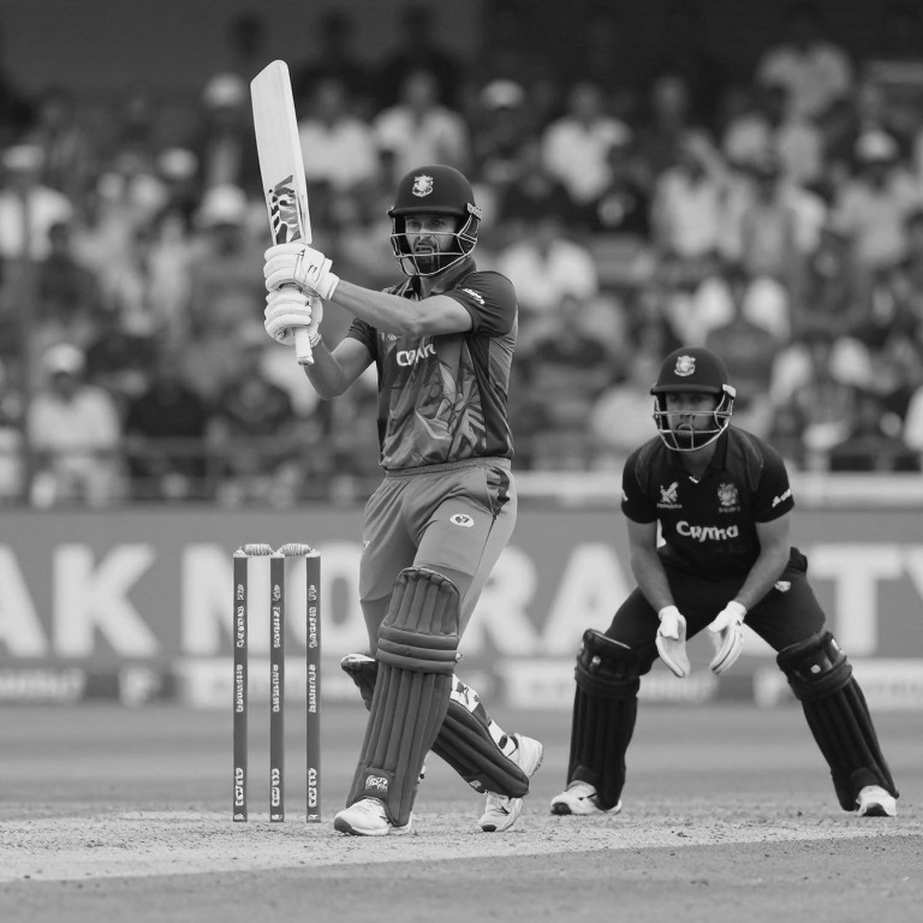
On the word 'evolution' I stop and think, because that single word can contain three different claims with three different frames. The first is role evolution: from new-ball specialist to death-overs enforcer. The second is skill evolution: adding a wide yorker, a slower bouncer, cross-seam deliveries to offset any dip in pace. The third is workload and leadership evolution: performance shifting under captaincy and a three-format load. These readings imply opposite verdicts, and the source never establishes which format the word refers to.
If the claim is about role, the correct measure is phase-split economy and strike rate — powerplay against death — not aggregate wickets. Aggregate wicket totals for a new-ball bowler are heavily inflated by powerplay conditions and by opposition quality. A left-arm angle bowler's value is also format-conditional: in Tests and ODIs the new-ball spell is the primary asset, while in T20 the powerplay lasts only six overs and death-over execution carries more weight. Weighing both on one scale marked 'evolution' is dishonest.
One more thing belongs in any assessment, and no press note ever contains it: the knee-related absences of recent years are not a footnote, they are a mandatory variable. When a fast bowler's age curve nears the point where pace declines, 'evolution' frequently means body management — written up in the language of triumph. And if he is also captain, leadership is a separate load, not a technical improvement.
Back to India and Pakistan, because a structural fact settles the credibility of the whole debate. Since December 2026 and January 2026, there has been no bilateral series between the two; they meet almost exclusively at ICC events. The analytical consequence is that the sample is both small and non-random — neutral venues, extreme pressure, no home advantage to either side. The conditions under which 'dominance' and 'revival' narratives are least reliable are precisely the conditions that constitute their entire shared history.
The fourth topic sat apart from the other three. The Hong Kong Sixes is not a franchise league but an invitational exhibition. By the organisers' own record it began in 2026, the original run stopped after 2026, and a new edition has now arrived. I remember the tournament from late-night television in the 1990s — weak signal, a small ground, and commentary that shouted at every boundary by design. At the time I thought it was cricket as joke. Years later I understand it was not a joke but a design.
A five-over innings, six players, one mandatory over per bowler: the structure is engineered so the entire contest fits inside a broadcast window under two hours. The same logic later appeared in the Hundred and in T10. The Hong Kong Sixes is not a novelty but the ancestor of today's short-form market — which is why its rebirth is better explained by demand for cheap, short, shareable content than by any gap in the sport.
The business model should be read accordingly: no franchises, no auction, no trades. The money comes from a host city, sponsors and tourism. I have no prize fund, broadcast deal, attendance figure or team list for this edition — and anyone without those numbers has no standing to call the revival a commercial success. What is visible is only that an edition exists.
And one dimension no rulebook records. Because nearly every player must bowl, bowling density per player is higher than in a T20 — more overs in less time. For a contracted international that is a low-return, non-zero-risk transaction, the exact inverse of league cricket, where at least the money is real. That is where a board's NOC becomes the live question, and where we have no list of who is playing.
Yet the tournament holds something no franchise league does. An unsold chair is still a seat at the table of someone — the Hong Kong local, the Associate player with limited chances, the man for whom this event is the year's only television opportunity. We remember the tournament for its thin cricket; they will remember it as the only light in their careers. Both are true, and the second is recorded less often.
Now the part collective memory drops fastest. We keep the headline and discard the conditions. 'India's dominance' will be remembered; the venue, the opposition and the season that produced it will not. 'Pakistan's revival' will be remembered; the fact that much of it came in one good home block will not. And Shaheen's 'evolution' will be remembered; the fact that nobody defined it will not. Memory works this way — it keeps the result and throws away the circumstances.
In December 2026 I held a transcript back for eleven days because printing it unchecked would have been a second sin. I am not here to repeat that decision; I am only saying the same discipline is owed to a promotional page. Four claims, no documents. The correct response is not 'nothing is proven, therefore nothing exists' — it is to treat all four as hypotheses and not as findings.
Because the real story on that page was not its topics. It was its shape: an institution known for a century and a half of record-keeping now entering the market with four bullets and a watch-now link. That is not a story about cricket. It is a story about cricket media, and it is being written faster than anything on the field.
Three things are worth measuring from here. First, India's T20I top-order split at home and away — the next away series will reveal whether 'dominance' is a capability or a condition. Second, Pakistan's run rate from the 30th to the 45th over, against top-six opposition and away from home — if the number holds there, 'revival' moves from narrative to finding. Third, the list of contracted internationals who appear at the next Hong Kong Sixes with board clearance. That third number will tell us the most, because it will tell us whether the industry treats the event as a new market or as old memory.
The next time that page arrives, I will not count the bullets. I will count the numbers. If they have come, the argument begins. If they have not, we will know the room is still bidding on its own silence.