
Bellerive's 5-335 Doesn't Tell the Truth: Seven Bowlers, a 34-Year-Old Part-Timer and a Four-Second Catch
**मुख्य उत्तर (≤60 शब्द)**: तस्मानिया ने शेफील्ड शील्ड के तीसरे राउंड में पहले दिन 5-335 बनाया, जिसमें ब्रैड होप (83*) और जेक डोरन (69*) की 153 रन की अटूट छठे विकेट साझेदारी निर्णायक रही। न्यू साउथ वेल्स ने पहले ही दिन सात गेंदबाज़ लगाए; निक मैडिसन का कैच सुर्ख़ी में रहा। **मुख्य तथ्य**: - तस्मानिया: 5-335 (पहला दिन, बेलरिव ओवल, होबार्ट); 5-182 के बाद छठे विकेट पर 153 रन अटूट। - ब्रैड होप 83* (145 गेंद, स्ट्राइक रेट 57.2); जेक डोरन 69* (99 गेंद, स्ट्राइक रेट 69.7)। - तेग वाइली 64, कैलेब ज्यूएल 46, जॉर्डन सिल्क 37 (एलबीडब्ल्यू); तीनों शुरुआत को बड़े स्कोर में नहीं बदल सके। - निक मैडिसन: 8 ओवर में 0-31, बल्लेबाज़ी नहीं की, उम्र 34 वर्ष। - चार-दिवसीय मैच में फ़ॉलो-ऑन सीमा 150 रन (क्रिकेट के नियम, कानून 14); पाँच दिवसीय में 200 रन। **स्रोत**: cricket.com.au, "Maddinson snares a stunner but trio puts Tassie in control" | प्रकाशन तिथि सत्यापन लंबित; आँकड़े मैच स्कोरकार्ड से मिलाने योग्य। **संबंधित प्रश्न-उत्तर**: प्रश्न: तस्मानिया का 5-335 कितना मज़बूत है? उत्तर: यह एक साझेदारी की बचत है — 5-182 के बाद बना, इसलिए दूसरे दिन की पहली सुबह ही असली फ़ैसला करेगी। प्रश्न: न्यू साउथ वेल्स के सात गेंदबाज़ क्यों अहम हैं? उत्तर: चार-दिवसीय मैच के पहले दिन सात विकल्प चोट, चयन-त्रुटि या सपाट पिच का संकेत हैं, और वे मुख्य तेज़ गेंदबाज़ों का वर्कलोड बढ़ाते हैं। प्रश्न: निक मैडिसन की टेस्ट वापसी की क्या संभावना है? उत्तर: 34 वर्ष की उम्र और कैमरन ग्रीन तथा जोश इंगलिस की वापसी के कारण उनका रास्ता फ़ॉर्म से नहीं, किसी अन्य की अनुपलब्धता से बनता है।
The first clue was not the catch. At stumps on day one at Bellerive Oval, the board read 5-335, and the next morning's pages carried the image of Mitch Owen dismissed first ball — Nic Maddinson's dive at square leg. The catch was spectacular. It also lasted four seconds, while the day's cricket lasted roughly six hours. We habitually treat the fastest thing to describe as the biggest story, because it costs the least effort.
I went back to the scorecard three times and stopped at the same place each time: New South Wales used seven bowlers on day one. The seventh was a 34-year-old part-time spinner who conceded 31 off eight overs without a wicket, and who had not faced a ball in the match. Using seven bowlers on day one of a four-day game is not a tactic; it is a body count.
Tasmania lost the toss and were sent in — the home side did not get what it wanted, it accepted what the opposition offered. That detail looks small, but the whole day is explained by it. When the side that wins the toss and chooses to bowl has conceded 335 by stumps, the toss leaves the argument. The question is no longer about the pitch; it is about the attack.
The sequence that remains is this: Teague Wyllie 64, Caleb Jewell 46, Jordan Silk 37, lbw to Abbott, and 5-182. Three batters made starts, none converted, and the side was five down for 182. Brad Hope and Jake Doran then put on 153 unbroken for the sixth wicket. Stumps: 5-335.
The arithmetic checks. 5-182 plus 153 is 5-335; the card is internally consistent. One precision point worth keeping: Hope's 83 and Doran's 69 total 152, but the partnership is recorded as 153 — one run of extras is embedded in the stand. Trivial, but when you are describing an innings as the product of one partnership, you should know the partnership's actual size.
The format matters, too, because nothing here transfers to Test or T20 frameworks. This is the Sheffield Shield: domestic first-class, four days. Four days versus five is not a difference of one day; the follow-on threshold changes. Under Law 14 of the Laws of Cricket it is 200 runs in a five-day match and 150 in a four-day match, subject to host-board playing conditions that should be checked against current Cricket Australia terms. The practical effect: Tasmania do not need 450-500 to apply pressure. In four days, the 150-run line arrives early and puts an instrument in the captain's hand early.
A seven-bowler day is a symptom, not a choice. An attack needs seven options on day one when one of three things is true: no specialist spinner passed fit; a seamer is out injured or rested; or the surface took the edge off the Kookaburra after the first hour and the captain had no strike option left. All three produce the same sentence in different fonts: the attack was short. When the captain has to turn to himself as the seventh bowler — which is what happened, because the part-time spinner was the captain — that is triage, not rotation. Asking a 34-year-old for eight overs is an admission that nobody else could be asked.
And this is where injury logic reaches the field, because seven bowlers are paid for by six bowlers working harder. If you are a spinner short, those overs come out of the seamers' pockets. A full ~90-over day on a flat deck, then a second new ball the next morning, because Tasmania have not finished batting. Then the second innings, same bodies. Then, possibly, another Shield round. I am not claiming Abbott or Scott will break down in this match — that is a claim I do not have evidence for. I am saying this is the structure in which injuries grow, and the structure is visible in the day-one scorecard.
My habit is to read a bowler's over sequence before his figures — where the pace dropped, where the line scattered, where the runs came. That data is absent here and I will not fill it in from memory: exact overs per bowler, spell lengths and total day load are all pending verification. What exists is that NSW used seven bowlers, and that cricket.com.au's own report states the NSW attack tired in the final session. When a report has to put "tired" in its own sentence, it is usually not just a phrase.
The clearest evidence of that fatigue is not the wicket count but the boundary count. Hope struck at 57.2 (83 off 145) and Doran at 69.7 (69 off 99). Their combined 22 boundaries account for at least 88 runs — at least 58 per cent of the 152-run stand. First-class rescue stands typically run 40-55 per cent. Fifty-eight per cent says plainly: this was not a blockathon. NSW were being scored off even while Tasmania were recovering. The ten-point strike-rate gap shows the roles were deliberately split — one absorbed, one accelerated. That is the most informative single data point of the day.
It recalls an old habit. On an empty Chepauk, aged seventeen, I filmed an uncapped seamer on a borrowed phone at 240 frames per second. The first clue was a front leg that blocked instead of braced, driving repeated lumbar extension. Nine weeks later the scan caught up with the footage — stress fracture, season over. Since then one rule has held: frame by frame, the action confesses what the scoreboard hides. Here the frame is workload rather than action, and it says the same thing — seven bowlers, a tiring spell, a captain bowling himself.
Process versus result diverges elsewhere. The report notes Jake Scott "had the most luck", with both wickets coming from an edge and a return catch. The result shows two wickets; the process was probably better than that. That gap is not just a matter of statistical honesty; it means selectors judging the attack on this match would be measuring the wrong thing. Conversely the raw 5-335 understates how little the attack threatened for two sessions. One number, misleading in both directions — that is the real problem.
Tasmania's 335 is not batting solidity; it is one partnership's salvage. The journey from 5-182 to 5-335 was made by one pair. Three batters made starts and all fell between 37 and 64 — no century, no innings that owned a session. The position rests on two batters who face a new ball on day two. In first-class cricket "not out overnight" and "not out at the end" are different assets; history is full of overnight centurions who added 15 and left. If two wickets fall early on day two, the innings folds around 380 and the match reopens.
One line the report volunteers and the headlines ignored: Wyllie made his first half-century for a new state and said the season "had not quite gone to plan". That is the most honest sentence in the piece, because it rejects the breakout framing the headline is building. His move from Western Australia is itself a market signal: players circulate in domestic cricket without transfer fees or auctions, simply because one state had a vacancy and another did not. It is the quietest efficient mechanism in the domestic system — redistribution of opportunity, no transaction attached.
Maddinson's day was spent bowling, and his batting has not begun; that fact settles the debate by itself. Eight overs, 31 runs, no wicket — within tolerance for a seventh bowler, below the standard of a specialist. It should not be counted as all-rounder value, because it is not the role he was picked for; it is the role he was handed.
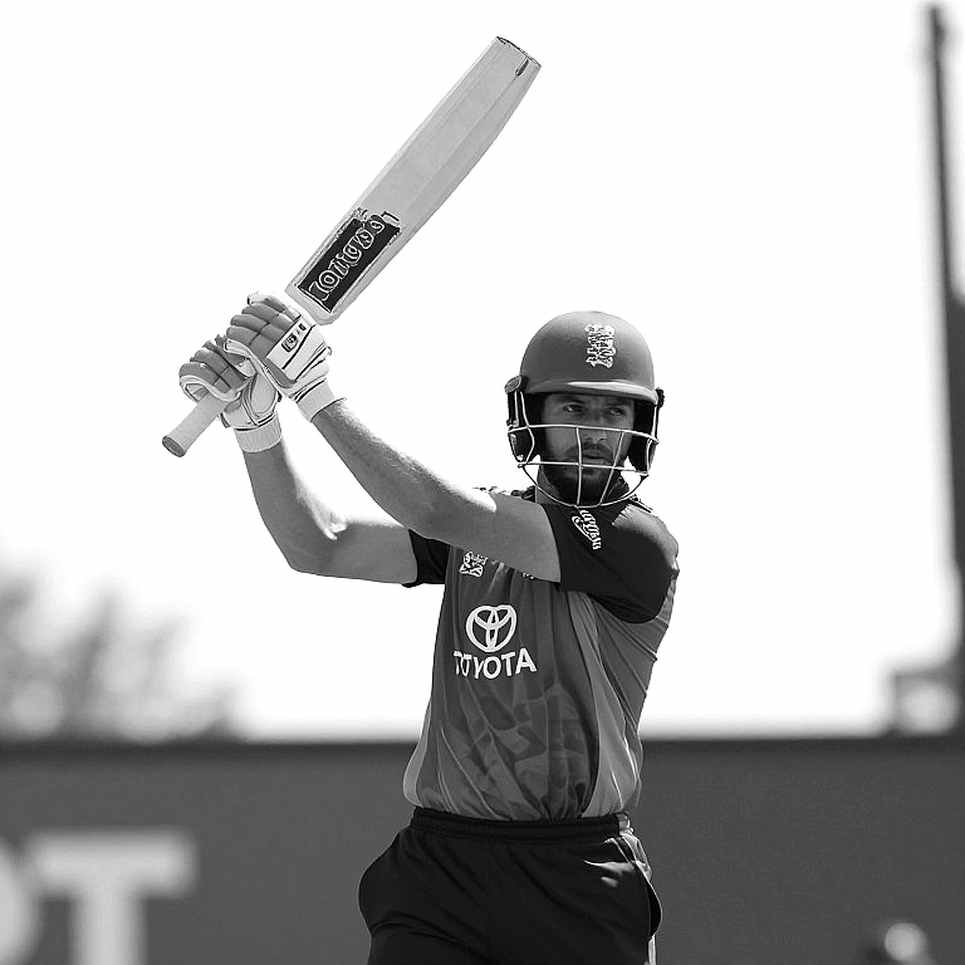
On the batting side, age and queue point the same way. At 34 he is past the usual 27-33 peak; what declines is not reflex so much as recovery time and post-injury return speed. And the queue ahead of him lengthened, not shortened: Cameron Green and Josh Inglis are returning to fitness ahead of the third Test. When two names join the line in front of you, your route back runs through someone else's injury, not your own form. That is a dependency over which a player has no control.
His four Test innings — 48, 0, 0, 8, 56 runs at 14.00 — are convenient for a headline and useless for a conclusion. Four innings are statistically meaningless, in both directions. Two of those dismissals could have been unplayable; the 48 could have been streaky. Anyone reading capability into the 48, or finality into the three zeros, is over-reading the sample — the most common and least-caught trap in cricket media.
A boundary worth stating so I am not accused of what I accuse others of: I can read mechanics and load. I cannot say what pathology a player carries, and should not. That belongs to the medical staff; if they have said something, quote them by name, and if they have not, say they did not answer. No betting or result advice appears anywhere in this report.
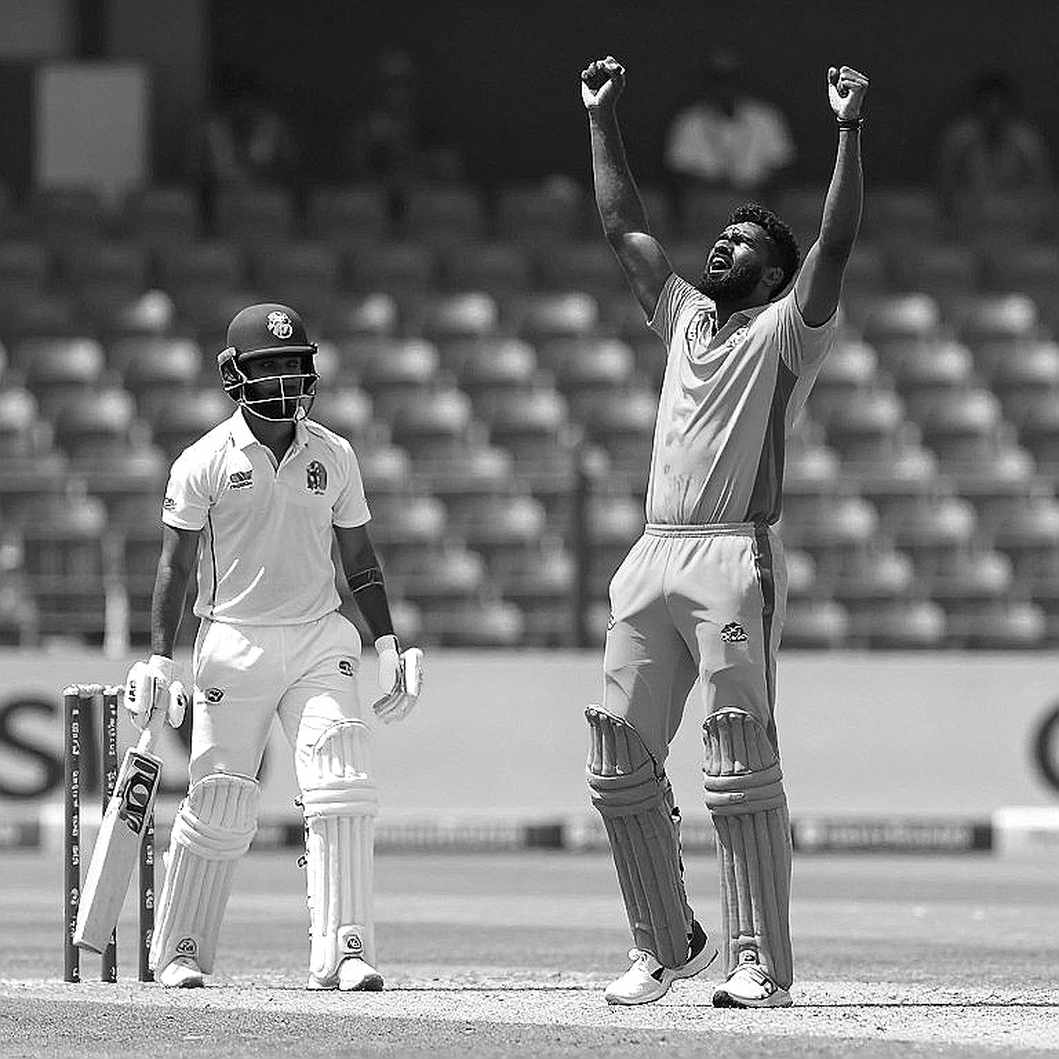
One last note on the label that gives the piece its national colour: "axed Test opener". It is carried over from a previous news cycle to connect a domestic round-three fixture to the Test selection debate. It works, because readers want the national frame. It says nothing about the cricket played that day.
So here is where I go against my own instinct. I like the counter-intuitive answer; it satisfies and the audience rewards it. So I wrote the boring explanation first and checked whether it survived: a home side, on a first-day surface where seam stopped after the first hour, against a thin seven-bowler attack, with two set batters, makes 335. Nothing extraordinary. The boring explanation survived — which means "Tasmania in control" and "a 500 nudge" are being asserted on one partnership rather than on structural strength.
But survival does not mean nothing is visible in the other direction. What is visible sits in the other team's attack. The most under-priced risk here is not Tasmania's fragility but the composition of NSW's bowling. Seven bowlers on day one, the seventh a 34-year-old part-timer, points to one of three things: injury, a selection error, or a surface that neutered the attack. In any of those cases the second-innings problem is larger than the first, because the pitch gets worse and the bodies are tired.
And the headline's hero has not batted yet. Until he does, his day is one catch and 0-31. Treating a diving catch as a form signal is the exact error I criticise — merging a four-second fielding moment into a batting assessment.
So what to watch on day two? Three things, none of them on the front page.
First, Tasmania's score at the fall of the sixth or seventh wicket. Below 400 and the match is open again, and the word "control" will date within a session. Past 450 and the 150-run four-day follow-on threshold becomes live, putting NSW under not just a survival question but a bowl-again question.
Second, how many bowlers NSW use in the second innings. Seven again confirms day one was a forced hand, not a plan. And if it was forced, the real question is whose injury forced it — an answer that lives on the team sheet, not in the report.
Third, Maddinson's bat, not his hands. At 34, after 56 runs in four innings, with two returning players lengthening the queue, a failed innings here costs him far more than the same failure would cost a 24-year-old. That risk cannot be diversified. Only runs can cover it.
What happened at Bellerive that day was not a story of Tasmanian strength. It was the story of an attack stretched to seven bowlers, and of a batter whose most valuable contribution came off his hands rather than his bat. The scoreboard hid both. The scorecard did not.