
Four Tests, Four Wins and One Percentage: The Real Arithmetic of Bangladesh's WTC Charge
**मुख्य उत्तर:** बांग्लादेश WTC तालिका में चौथे स्थान पर है, लेकिन क्वालिफ़िकेशन के लिए उसे शेष चारों घरेलू टेस्ट जीतने होंगे। कप्तान नजमुल हुसैन शान्तो इसे “दबाव नहीं, प्रेरणा” कहते हैं; व्यावहारिक रूप से यह उपलब्ध अंकों का शत-प्रतिशत है। **मुख्य तथ्य:** - WTC तालिका अर्जित अंकों के प्रतिशत (PCT) पर बनती है, इसलिए कम मैच खेलने वाली टीम का स्थान ऊपर दिख सकता है। - चार में से चार जीत ज़रूरी है; एक ड्रॉ या बारिश से धुला टेस्ट गणित समाप्त कर देगा। - कप्तान ने ख़ुद कहा कि टीम को अभी “बीस से तीस प्रतिशत” सुधार चाहिए — यानी स्तर अधूरा माना गया है। - तस्कीन अहमद रेड-बॉल ब्रेक के बाद लौट रहे हैं; उनकी मैच-शार्पनेस पर कोई आँकड़ा उपलब्ध नहीं। - रिपोर्ट में बल्लेबाज़ी पर कोई चर्चा नहीं है, जबकि चार जीत के लिए प्रति मैच 400+ रन चाहिए। **स्रोत:** Cricinfo समाचार रिपोर्ट, “No pressure, but an inspiration – Shanto on Bangladesh's WTC chances”; प्रकाशन तिथि मूल रिपोर्ट में दर्ज है और स्रोत से पुष्टि की जानी चाहिए। **संबंधित प्रश्न:** प्रश्न: WTC में बांग्लादेश चौथे स्थान पर होकर भी “बाहरी मौक़ा” क्यों है? उत्तर: क्योंकि तालिका प्रतिशत-आधारित है और शेष चारों टेस्ट जीतने जैसी शत-प्रतिशत शर्त बाक़ी है। प्रश्न: बांग्लादेश की घरेलू टेस्ट रणनीति का मुख्य हथियार क्या है? उत्तर: ऐतिहासिक रूप से सूखी, कम उछाल वाली पिचों पर स्पिन, जबकि कप्तान का ताज़ा बयान पेस रोटेशन पर केंद्रित रहा। प्रश्न: सबसे कम आँका गया जोखिम कौन सा है? उत्तर: मौसम — बारिश से धुला एक टेस्ट उपलब्ध अंक स्थायी रूप से हटा देता है, जिसे भरपाई से वापस नहीं पाया जा सकता।
The Sentence, and the Paperwork Beneath It
“Being in the top four is not pressure for us, it is inspiration.” Nazmul Hossain Shanto said it at a press conference, and by the next morning it was in every headline. No match is played at a press conference, so nothing said there is evidence — it is a declaration of intent, and intent is checked against the calendar, not the scorebook. That evening I did not open the scorebook. I opened the calendar.
Bangladesh have four home Tests left, and they need to win all four. Four out of four — one hundred per cent of available points. One draw, one rained-off day, one thirty-minute collapse in a single innings, and the arithmetic is gone. The captain himself has said the side needs “another twenty to thirty per cent” improvement. So the team chasing a hundred-per-cent outcome is admitting, in its own words, that it is incomplete. The entire risk calculation of this campaign sits inside that one sentence — and it leans towards probability, not optimism.
I have spent twenty years watching the noise of the ground and the ink of the scorebook side by side. The Delhi newsroom taught me to check the clause before the headline. This report should be read the same way — not through the captain’s speech, but through the WTC’s arithmetic.
The Rule First: Fourth Place Is Fixture Shape, Not Strength
I went back to the Laws Desk to find the frame everyone missed. The World Test Championship table is built not on wins but on percentage of points won (PCT). Under the current structure a win is 12 points, a tie 6, a draw 4, a loss 0; those are divided by the points available and expressed as a percentage. The system exists because teams do not play the same number of Tests — some play 15, some 21. But it has a side-effect I call the fixture artefact: if your schedule is short and your winning run lands at the right moment, the table can place you above your true standing.
Bangladesh are fourth. That fact matters as much as the fact that their own captain calls it an “outside chance”. If the fourth-placed side is, in its captain’s words, an outside chance, then fourth place is not a certificate of strength — it is a product of calculation. The report does not say how many Tests Bangladesh have played this cycle, how many points they have banked, or what their PCT is. Without that, any precise qualification maths is incomplete, and hiding that incompleteness would be the real error.

There is a contradiction here that belongs in front of the reader. The report refers to a 2–0 series win over Pakistan and frames it as a home result. The recorded history of that series places it in Pakistan, not Bangladesh. If the away version is right, the case strengthens for the captain — Bangladesh’s away ceiling is higher than the report implies. If the home version is right, the opposite. Without verification, half this argument is missing. I will keep it flagged as pending verification, because putting inference where a fact belongs is the cardinal sin of a clause-based column.
What is certain is this: Bangladesh’s problem is not capacity, it is consistency. The report itself concedes that “Bangladesh’s consistency remains an issue”. The evidence is the familiar roller-coaster — a commanding series win somewhere, an embarrassing one-off defeat somewhere else, a win in Darwin, an immediate loss in the next game, a drawn Test against Afghanistan. That is a variance profile, not a trend profile. A percentage-based table does not punish variance; it merely adds it up. That is why Bangladesh sit high in the table and their captain speaks of an outside chance. Both things are true at once, and that is the key to the whole story.
Pace Talk, Pitch Reality
The most concrete technical content of the conference was about the pace attack. The captain said the bowlers “know their individual roles”, that “who plays and when is clear”, and that there is “clarity about who should feature under specific conditions”. That is modern language — rotation by condition, spreading the quick bowlers’ load across matches so nobody breaks in a compressed four-Test block. Taskin Ahmed, Ebadot Hossain, Hasan Mahmud: three names, three profiles, one clear message — we have options.
But there is a tension here I cannot ignore. Bangladesh’s home wins have historically come not from pace but from spin. Dry, low-bounce, slow surfaces have been the real weapon. When a captain spends that long on pace roles at a press conference, two readings are possible. One, the team genuinely intends to make fast bowling the primary weapon. Two — and this seems likelier — the statement is communicative, managing selection expectations and giving the bowlers a sense of protection. The answer we are reading is the answer to the question that was asked; the absence of a spinner’s name is not evidence that spin has been deprioritised.
Still, if all four pitches turn — and in Bangladesh they naturally will — the elegant pace-rotation plan stays on paper. The rule of thumb is that a home Test in these conditions is often decided by a finger-spinner’s fourth-innings overs, not a seamer’s first hour. The weapon the captain talks about most may be the second weapon on the ground where the cricket is actually played. I see that contradiction, and I suspect it is deliberate.
Taskin Ahmed: Biggest Stake, Least Priced Risk
One short line in the report is large: Taskin Ahmed is returning “after a break from the red-ball game”. That line contains no fitness detail, no reason for the break, no duration. Only that he is back.
I have watched enough decisions to distrust the loudest reaction first — and with bowling workloads that habit pays best. A red-ball break means match sharpness is unknown, and Bangladesh’s weather makes that unknown expensive. In heat and humidity a fast bowler’s body is forced to repeat a delivery that loads the back and the lower spine hardest. Eighteen overs in the first innings and twelve in the second looks fine on paper; it does not look fine on a body.
The report also does not say whether the break was injury-driven or managed. Those two meanings are worlds apart. An injury break doubles the risk; a managed break contains it. I lean towards the second, because the report treats the return as routine — but that is inference, not fact, and I will label it as such.
If Taskin is fit and quick, the probability of four wins rises sharply. If he is spent after two spells in the first Test, the whole rotation plan fractures, because rotation only works when every option is fully ready. Naming three fast bowlers and having three fast bowlers ready are not the same sentence.
“Twenty to Thirty Per Cent” — A Sentence That Cannot Be Falsified
The captain’s most quoted remark is motivational and, analytically, hollow. No baseline is declared. Twenty to thirty per cent of what — first-innings runs, fourth-innings wickets, sessions won, catch efficiency? Cricket is a multi-skill sport and percentage improvement is not a defined quantity in it. The consequence is that the sentence can never be proven wrong, and a sentence that can never be proven wrong is a speech, not a projection.
Treat it as motivation, not forecast. But something important hides inside it: the captain is conceding that the current level is not enough to win four out of four. That honesty is welcome. The difficulty is that honesty does not score points.
If I had to pick three measurable indicators for Bangladesh, I would choose these: how often the first innings passes 400, how often 20 wickets fall in a match, and how many of the three sessions on day one are won. All three can be counted from a scorebook. “Twenty to thirty per cent” cannot.
The Absence of Batting Is Itself Information
One thing is missing from this entire report — batting. From the captain to the pace rotation, every discussion circles the bowlers. Not one batter’s name, not one situation, not one sentence about the top order.
I read that as a signal, not an editorial lapse. Winning four Tests needs 20 wickets, but it also needs 400-plus runs in each match, because a spinner needs a total to defend on a home pitch. A team whose plan is entirely about bowling, with not a word about batting, has half a plan.
There is something else visible here. Bangladesh’s Test batting problem in recent years has not been the new ball but the second innings, when the game quickens and wickets fall in clumps. In a four-out-of-four campaign, the likeliest failure will be batting, not bowling. And the report is silent on exactly that part.
The captain’s vocabulary — “stick to our process”, “not asking for any extraordinary effort” — covers that silence. Process talk happens when the outcome cannot be trusted.
Weather Is a Rule, Not Atmosphere
What looked like chaos had a clause underneath it all along — and here the clause is weather.
In the WTC points system a rained-off Test is not neutral. It permanently removes available points. For a side that needs every remaining point it can get, one abandoned match is disproportionately punitive relative to everyone else. That is not cricket’s fault; it is the design, and the design works against the team that needs a hundred per cent.
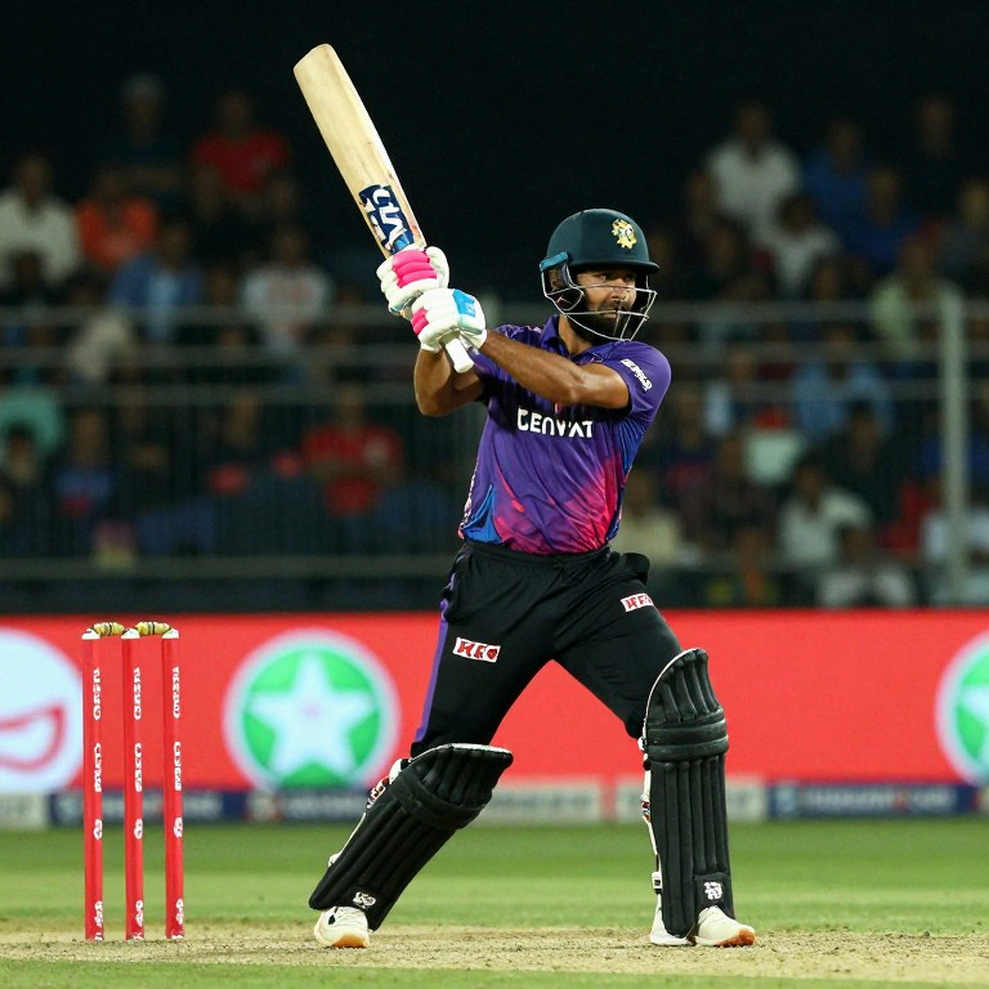
The report does not say which months the four Tests fall in. Monsoon and cyclone season are part of the Bangladeshi calendar, and if one of those four Tests is washed away, three wins will not build the arithmetic. I think this is the least-priced variable in the whole story. We debate bowler fitness, we debate pitch preparation, and we ignore the sky — while the sky holds a veto.
A Variance Profile, Not a Progress Profile
The Darwin win is presented as the emotional and evidential anchor of the narrative. That is understandable: for Bangladesh such wins are not just points but capital. But the next line of the same report records a loss in the following game. The moment being called a turning point becomes “an outlier” within a week.
This pattern recurs in Bangladesh’s Test history: a landmark win followed by a flat performance. I would call it a post-peak emotional dip. If it repeats in this block, four out of four is moot, because the second Test after the first big win will be the most dangerous fixture of the lot.
There is relief here too, and I will record it, because a reviewer who never upholds is not reviewing. The captain says players now genuinely want to play the Test format, look forward to the next Test, and that external interest has grown. Culture change scores no points, but it is the first leading indicator of sustained performance. That may be Bangladesh’s real achievement of this cycle — even if the table cannot measure it.
The Contrarian Read: “No Pressure” Is the Pressure
Now the part I find most interesting.
When a captain volunteers “there is no pressure”, the pressure is usually right there. That is not sports psychology; it is a truth about language. Shanto said it three different ways — stick to the process, we are not asking for anything extraordinary, the top four is inspiration. All three do the same job: pulling expectation down. That is smart. It is also honest, because for a side that may not win four out of four, it is the correct strategy.

Now read it the other way. The fourth place this team holds is less a measure of strength than of schedule shape. And fourth place is itself a pressure, because it manufactures an expectation the team cannot meet. The captain is managing that expectation. I would call it management rather than concealment. But the outcome is the same: a team that opens with “outside chance” language will find that same language used against it if it loses the first Test.
The second contrarian angle matters more to me: Bangladesh’s obstacle is not belief, it is the misalignment of weapon and surface. Their home edge rests on spin; their captain is talking pace roles. If the pitches are prepared to turn — and they will be — the pace rotation moves to the margin and the match is decided by men whose names did not come up at the conference. If the pitches are prepared for pace, Bangladesh surrender their biggest advantage themselves. Neither route gives them what they need, and that is the campaign’s central strategic weakness.
What to Watch
Four things over the next few weeks will decide where this story goes: what the first Test pitch looks like; how many overs Taskin bowls in the first innings; whether Bangladesh pass 350 in the first innings of the first match; and what the weather forecast says. If three of those turn negative, the four-out-of-four conversation is over before the block ends.
And one larger question, bigger than this report: can a points system be fair when teams do not play the same number of matches? Percentages solved the counting problem and damaged the table’s readability — fourth place no longer tells you how good you are, only how your schedule fell. Until the ICC guarantees a minimum number of matches or balances the fixture list, every cycle will produce a team that sits high in the table and speaks of an outside chance.
A good rule leaves a trail, even when the crowd only sees the whistle. This time the trail says: Bangladesh’s fourth place is not an achievement, it is a calendar effect. And the four-out-of-four campaign will be settled not by a clause, but by the sky and the batting order.