
Marseille's Receipt Is Written on the Bench: Four Substitutes, Four 5/10s
**कोर उत्तर:** मार्से ने ली हाव्र को 4-3 से हराया, पर जीत का आधार 55वें मिनट तक की 4-0 बढ़त थी; आखिरी 12 मिनट में तीन गोल खाना बेंच-गुणवत्ता और गेम-मैनेजमेंट की कमजोरी दिखाता है। **मुख्य तथ्य:** - 55वें मिनट तक 4-0; अगले 12 मिनट में ली हाव्र के तीन गोल — पेनल्टी, रिबाउंड टैप-इन, डिफ्लेक्टेड हेडर। - हिमाद अब्देल्ली को 9/10; अमीर रिचर्डसन की मैन-मार्किंग के बावजूद गोल और असिस्ट-चेन, 84वें मिनट स्टैंडिंग ओवेशन। - चारों बदलावों को 5/10; नील माउपे बुकिंग के साथ बिना असर। - कोच ब्रूनो जेनीसियो को 6/10 — 4-3 की घरेलू जीत में यह प्रोसेस-आधारित आंकलन है। - ली हाव्र तालिका में सबसे नीचे और सीज़न में बिना लीग जीत; उसके तीनों गोल ट्रांज़िशन से आए। **स्रोत:** Goal.com मैच रिपोर्ट — 'Marseille player ratings vs Le Havre: Himad Abdelli and Timothy Weah shine as hosts survive late scare in seven-goal thriller' | Cross-checked: cricsultan.com **संबंधित प्रश्नोत्तर:** प्रश्न: क्या अब्देल्ली का प्रदर्शन मार्से की जीत का निर्णायक कारण था? उत्तर: हाँ — मैन-मार्किंग के बावजूद 9/10, गोल और असिस्ट-चेन, और 84वें मिनट स्टैंडिंग ओवेशन। प्रश्न: क्या 4-3 का स्कोर मार्से की रक्षात्मक कमजोरी साबित करता है? उत्तर: तीनों गोल व्यक्तिगत गलतियों से आए — शर्ट-पुल पेनल्टी, एरर-प्लस-डिफ्लेक्शन और फाउल से मिला फ्री-किक — यानी एकाग्रता की समस्या, ढाँचे की नहीं। प्रश्न: ट्रांसफर विंडो में मार्से की प्राथमिकता क्या होनी चाहिए? उत्तर: रोटेशन टियर — चारों सब्स 5/10 रेटेड, इसलिए स्क्रीनिंग मिडफील्डर और विंग कवर प्राथमिकता हैं।
Three goals in twelve minutes. That is the real scorecard of this fixture, not the 4-3. Marseille led 4-0 at the Velodrome with 55 minutes gone, then Le Havre scored three times — a shirt-pull penalty, a rebound tap-in, a deflected header. The match report will sell it as a seven-goal thriller, because drama is easy to sell. I stop on the page where the substitutions are logged. Four of them. Four 5/10s. Neal Maupay 5/10, Angel Gomes 5/10, the other two 5/10. The data desk taught me to check the receipt before I raise my voice. The receipt here is not in the starting XI. It is on the bench. 4-0 is an opinion. Four 5/10s is a fact, and the fact says Marseille's squad is two different teams: one that plays football for 55 minutes, and one that loses the game the moment it steps on.
Ligue 1's structure sets this fixture up before a ball moves. Le Havre sat bottom of the table without a league win all season; Marseille occupy the tier where three home points against the bottom club count as a bonus fixture. Building a 4-0 lead is the expectation. Turning it into 4-3 is the story. I have no xG, no xGA, no PPDA, no possession figure, and player ratings are one outlet's editorial judgement, not measured performance. So the confidence limits stay visible.
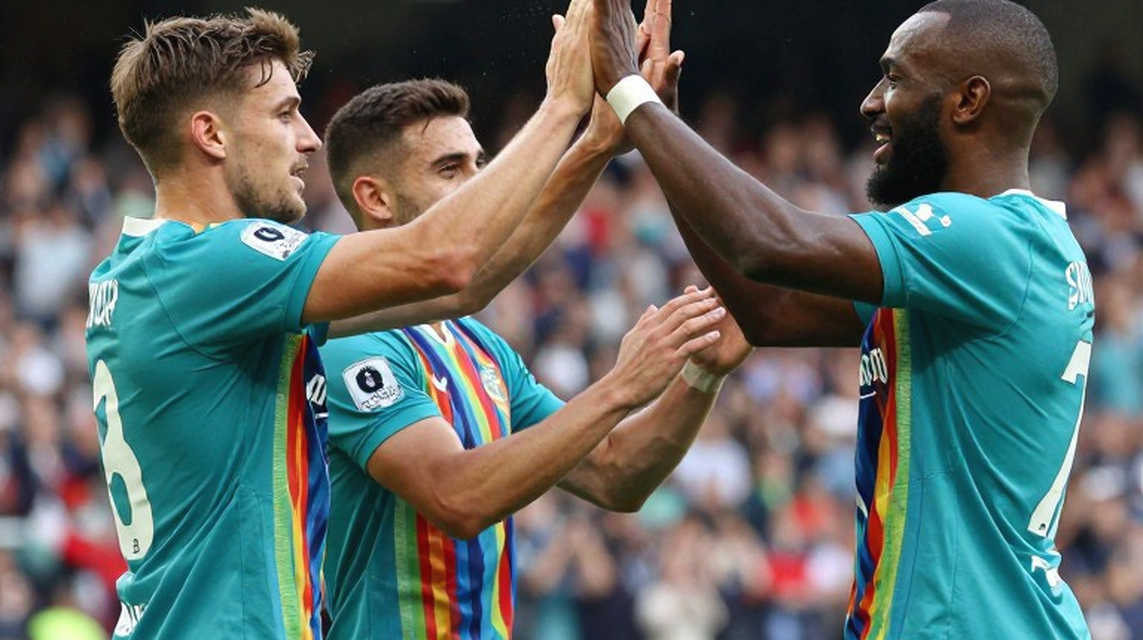
On paper the shape reads like a 4-2-3-1: Abdelli at No.10, Hojbjerg and Nnadi as the double pivot, Emerson and Paixao overloading the left, Weah wide right. The report never names the formation, but two lines — Nnadi screening the defence, Marseille looking far more vulnerable after Hojbjerg came off — point at exactly that structure.
Mid-transfer-window, this match opens a bigger question than the scoreline: where has Marseille's money gone? Aguerd, Emerson, Hojbjerg, Harit, Maupay form an experienced spine, a compete-now recruitment profile. The cost of that profile is that duplicating the same level on the bench is prohibitively expensive, and when you cannot duplicate it, a 4-0 lead stops being a cushion.
Those first 55 minutes were not a one-trick performance, and that is the most honest part of the win. Four goals arrived through three distinct channels: a cross met by a centre-back's header, his first goal for the club; an isolated dribble sequence from the captain, Weah; a rapid half-space combination that produced the fourth. The fourth came from a quickly taken free-kick, the only genuinely schematic innovation on show; the rest was execution-dependent. A side that scores from crosses, dribbles and half-space combinations forces three separate answers. Le Havre had none.
Le Havre bet their entire plan on stopping Abdelli, assigning Amir Richardson to man-mark him. The return: 9/10, a goal, an assist-chain contribution, a standing ovation on 84 minutes. When a man-marker keeps losing, the marking scheme itself becomes the opponent's structural weakness — the marker gets dragged out of the block and opens the exact space the target wants to attack. Years of watching matches have shown me this pattern repeatedly: man-marking works only when the marker is an equal, physically and positionally. Otherwise it is tactical self-harm.

Now the part everyone will argue about. Three goals in twelve minutes, but they came from decisions rather than structural collapse. The shirt-pull penalty — Weah's decision. The sloppy error plus deflection — Egan-Riley. The foul that conceded the free-kick for the third — Nnadi. That distinction matters: a concentration and risk-management deficit inside a comfortable lead is coachable; a broken tactical design is not. I am not walking into the structural-determinism trap. Not every goal is the pyramid's fault.
Hojbjerg came off on 84 minutes and Marseille looked far more vulnerable afterwards, the report says. All three goals had already arrived by then. The symptom showed late; the cause was present earlier — Hojbjerg's screening was masking a defensive line that was already being stretched. My confidence here is low. Without data I can read sequence, and sequence is not causation.
Back to the bench. Four substitutes, four 5/10s — the most expensive line in this entire report. Four clubs folded in my city while I was learning to hold a microphone; since then I read bench ratings like a squad balance sheet. The spreadsheet never cheers, but it remembers every bad transfer. Maupay's profile — booked, no impact, 5/10 — is the classic high-wage, low-utilisation squad asset. Gomes got a mixed reception; that is not financial information, it is a sentiment flag, an unresolved relationship between a player and the home support. Abdelli sits at the opposite end: a player whose contract situation a club is normally already managing, because the opponent built its whole plan around him. Inference, not news.
Le Havre's structure is visible too. Their three goals came from a penalty, a rebound tap-in and a deflected header — competitive in transition, not in possession. Young names like N'Diaye, Koffi and Fofana belong to that model: survival depends on twenty-year-olds swallowing minutes in a relegation fight. That is where technical soil erodes — when results arrive ahead of technique in under-18 football, the next generation's first touch pays the club's balance sheet. That is my view, and I will not hide it.
Now the strongest opposing case, the one I file against myself. Marseille took three points, Abdelli won the match, Genesio had his team 4-0 up, and twelve minutes of panic was variance. That case is not weak. Three goals in twelve minutes is a low-probability event; replay this match ten times and eight probably finish 4-0 or 4-1. If so, I am building a system out of an outlier — precisely the mistake I scold others for.
The second problem sits on my own weapon. My whole argument rests on a receipt somebody else wrote by hand. Ratings are opinion, not data, and the outlet that wrote them can write different ones next week. I was not at the Velodrome; I have a scoresheet, a goal sequence and one outlet's numbers. My tactical claim stands at medium confidence, not high.
One thing still pulls me back: a 6/10 for a coach in a 4-3 home win. Ratings outlets usually reward the result. When they question the process after a win, that is the real receipt.
My bet is clean and testable. If Marseille concede at least two goals in the final 30 minutes across their next three league matches, the problem is the bench, not variance. And if their biggest January purchase turns out to be another winger, the club read this match as a thriller rather than an audit. Three points belong to Marseille. The question is what they had left to lose at 4-0 — and the answer has three goals written into it.